 中文
中文
Service Center
WhatsApp/Wechat
+86 18576510428
Working Time
Monday to Friday
E-mail
info@fswesternland.cn
E-mail
mia@fswesternland.cn
E-mail
kikko@fswesternland.cn

Abby

Mia

Kikko

Saw Cutting and Polishing Machines: Essential Basics for Stone & Tile Processing
2026-01-05 14:10:13
Click:
“
This concise guide introduces essential basics of saw cutting and polishing machines for stone, ceramic, and mosaic processing beginners. It covers machine types (bridge/tabletop/handheld/multi-shaft cutting machines; floor/bench-top/handheld polishing machines), tool matching principles, and key usage & maintenance tips to ensure processing efficiency and quality.
”
In stone, ceramic and mosaic processing, saw cutting and polishing machines work closely with diamond saw blades. Proper matching ensures efficiency and quality. This concise guide covers their basics for beginners.

1. Overview of Saw Cutting and Polishing Machines
Saw cutting machines drive diamond saw blades to cut hard materials via high-speed rotation. Polishing machines refine workpieces with abrasive tools for smooth, glossy surfaces, enhancing product value.
Machine performance relies on tool compatibility—selecting the right machine and tool ensures optimal results.

2. Common Types and Characteristics of Saw Cutting Machines
Saw cutting machines are classified by structure, mobility and application, each matching different diamond saw blades:
2.1 Bridge Cutting Machine
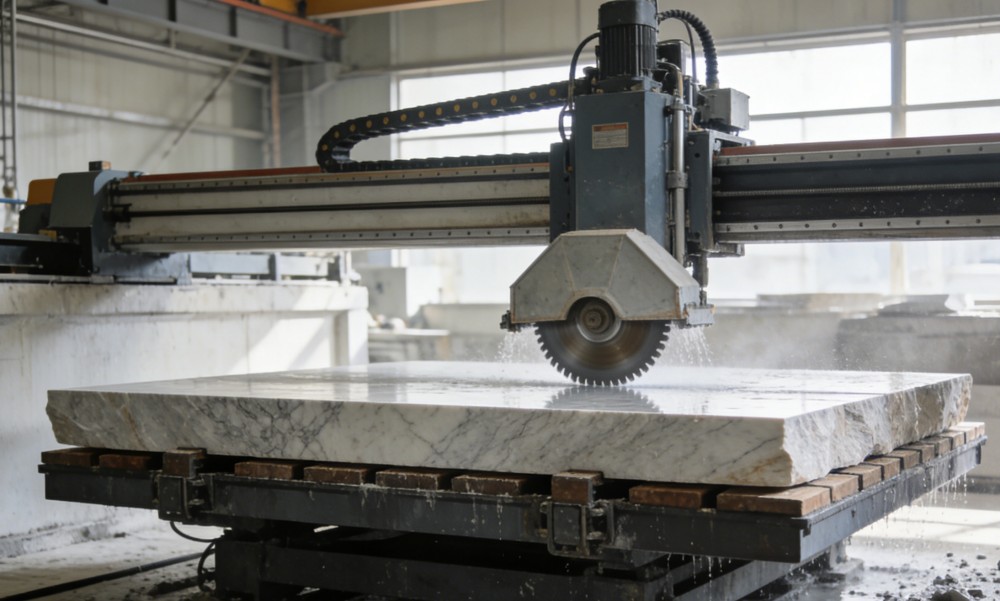
Bridge Cutting Machine: Large stationary equipment with high precision and stability. Used for large stone slabs/tiles, supports various cuts. Matches 300-1200mm segmented/continuous rim saw blades.

2.2 Tabletop Cutting Machine
Tabletop Cutting Machine: Compact, semi-portable, easy to operate. For small-medium tiles/mosaics. Matches 100-250mm saw blades (e.g., fish hook blades for mosaics).
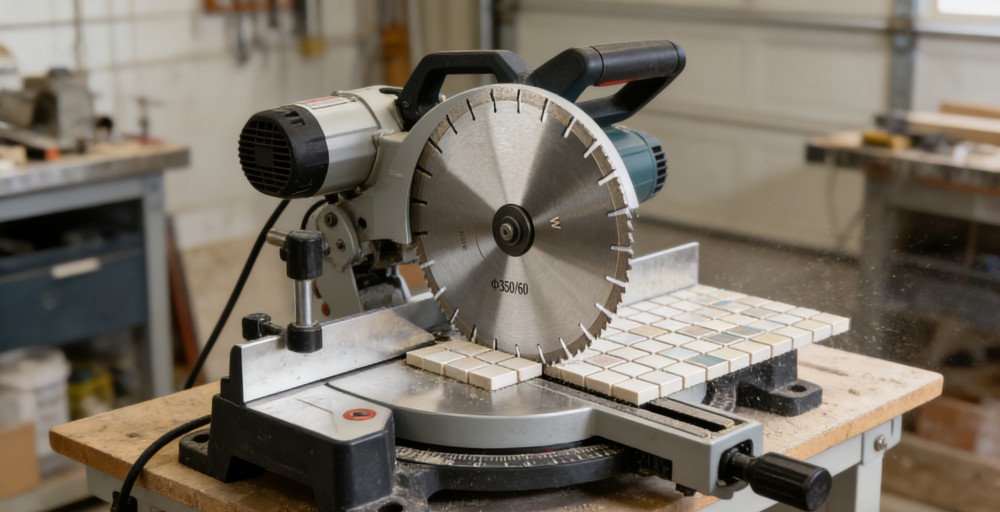
When matching saw blades, tabletop cutting machines are usually compatible with diamond saw blades with a diameter of 100mm-250mm. For example, fish hook saw blades suitable for mosaic tile cutting and continuous rim saw blades for ceramic tile precision cutting can be matched according to different processing materials.
2.3 Handheld Cutting Machine
Handheld Cutting Machine: Lightweight, portable, flexible. For on-site construction/trimming. Matches 80-150mm dry/wet-cut saw blades.

Due to their small size and limited power, handheld cutting machines are usually equipped with small-diameter diamond saw blades with a diameter of 80mm-150mm. According to the cutting method, they can be matched with dry-cut saw blades or wet-cut saw blades to meet the cutting needs of different on-site environments.
2.4 Multi-Shaft Cutting Machine
Multi-Shaft Cutting Machine: Automated, multi-spindle for batch cutting of small workpieces (mosaics). High efficiency. Matches specialized multi-shaft saw blades.

In terms of tool matching, multi-shaft cutting machines need to use specialized multi-shaft diamond saw blades. These saw blades have high consistency and can ensure that multiple workpieces are cut synchronously and with consistent dimensions, which greatly improves the production efficiency of batch products.
2.5 Classification by Cutting Method: Wet-Cutting and Dry-Cutting Machines
Saw cutting machines are also categorized by cutting method:
Wet-Cutting Machines: With water cooling, reduces wear and chipping. For precision cutting of ceramics/glass. Matches wet-compatible saw blades.
Dry-Cutting Machines: No water needed, with heat-dissipating slots. For water-inconvenient sites. Matches dry-cut saw blades with heat-resistant bonds.
3. Common Types and Functions of Polishing Machines
Polishing machines are mainly used for surface refinement of workpieces after cutting. According to the application scenarios and workpiece sizes, they can be divided into the following common types, each of which is targeted at different polishing needs.
3.1 Floor Polishing Machine

Floor Polishing Machine: Heavy-duty (ride-on/walk-behind) for large-area floors. Adjustable speed/pressure. Matches large abrasive pads.
3.2 Bench-Top Polishing Machine

Bench-Top Polishing Machine: Compact, table-mounted for small workpieces (countertops/edges). Precise control. Matches small abrasive pads/wheels.
3.3 Handheld Polishing Machine

Handheld Polishing Machine: Lightweight, portable for on-site touch-ups/irregular surfaces. Flexible, matches small abrasive pads.
4. Key Principles for Matching Machines with Blades/Tools
Proper machine-tool matching is crucial. Key principles (building on saw blade basics):
4.1 Size Compatibility
Size Compatibility: Saw blade inner diameter (50mm/60mm standard) must match machine spindle. Outer diameter fits machine's cutting capacity.
4.2 Material Adaptation
Material Adaptation: Hard stone (granite) needs high-concentration diamond blades; ceramics/mosaics need sharp, anti-chipping blades (e.g., fish hook).
4.3 Consistency of Cutting Methods
Cutting Method Consistency: Wet-cut machines match wet-compatible blades; dry-cut machines match heat-resistant, slotted blades.
4.4 Matching of Polishing Tools
Polishing Tool Matching: Resin pads for ceramics; diamond pads for hard stone.
5. Basic Usage and Maintenance Tips
Proper use and maintenance extend machine/tool life. Key tips:
5.1 Pre-Operation Inspection
Pre-Operation Inspection: Check spindle rotation, connections, wet-cut cooling system. Inspect blades/tools for damage.
5.2 Correct Startup and Operation
Correct Startup: Start at low speed, gradually increase. Avoid excessive pressure during operation.
5.3 Cooling and Heat Dissipation Management
Cooling Management: Ensure continuous water for wet-cut machines; avoid prolonged dry-cut operation, stop to cool.
5.4 Post-Operation Cleaning and Maintenance
Post-Operation Care: Clean machine/blades/tools. Store saw blades flat/dry. Replace worn polishing tools. Regularly lubricate machine parts.

6. Conclusion
Mastering saw cutting/polishing machine basics (types, matching, use/maintenance) boosts efficiency, quality and reduces costs. Correct machine-tool pairing is key for stone/tile processing.
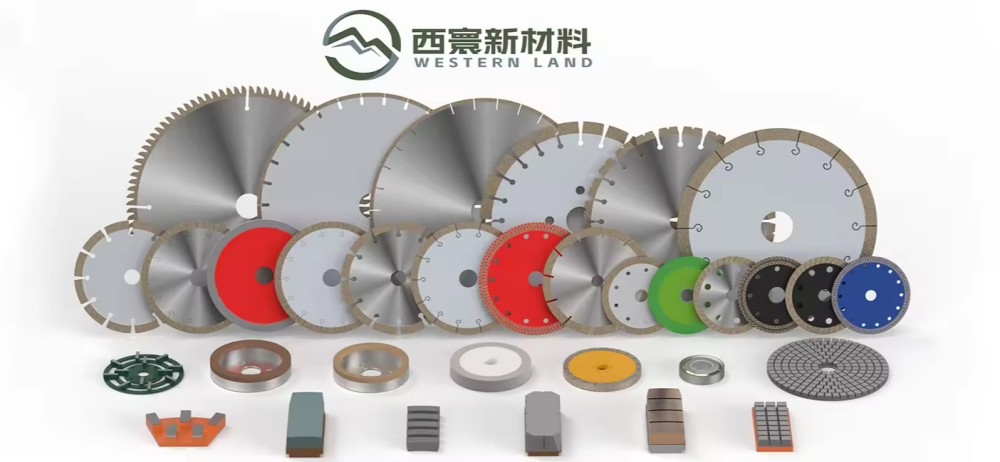
If you need customized diamond saw blades suitable for specific cutting machines (such as OEM services for multi-shaft machine-specific saw blades) or have questions about the matching of machines and tools, you can contact our technical team at any time to get professional answers and support.








Contact Us
Send your message to us


点击右上角
分享给朋友吧
WhatApp/WeChat:
+8618576510428
+8613450822915
Email: info@fswesternland.cn
Email: mia@fswesternland.cn
Email: kikko@fswesternland.cn
Address: Room 1505, Baoneng Financial Building, No. 8 Junlan Road, Dongping Community, Lecong Town, Shunde District, Foshan City
WhatApp/WeChat:+8618576510428
Email: info@fswesternland.cn
Address: Room 1505, Baoneng Financial Building, No. 8 Junlan Road, Dongping Community, Lecong Town, Shunde District, Foshan City
Copyright © 2024 Foshan Western Land New Material Co, Ltd. All Rights Reserved.
